A Waterfront Walk Built Around One Question
A waterfront walk built around one question helps you notice how entrances, edges, and stopping places shape access, comfort, and the feel of a visit.
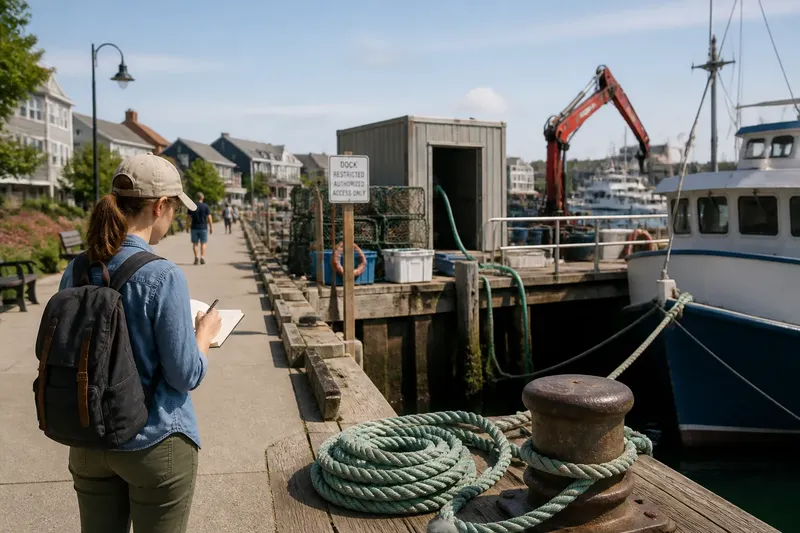
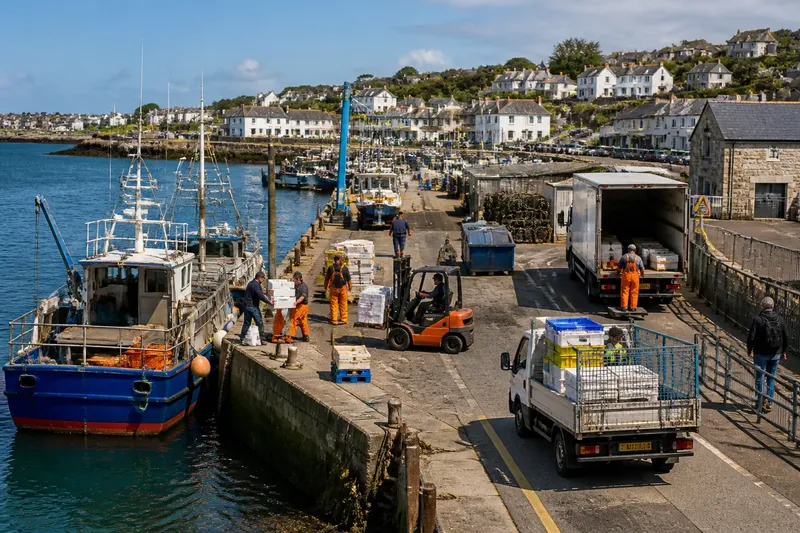
What does a waterfront let you notice about the people and work that keep it running? A waterfront walk built around one question can shift your attention from scenery to the small signs of a place in use: a mooring line, a fish crate, a delivery gate, or a patch of pavement worn by repeated trips. The aim is not to guess what happens behind every fence. It is to observe how the shoreline’s public life sits beside its working life.
Choose a public harbor path, riverfront park, or shore-side street where you can safely see activity without entering restricted areas. Bring a phone note or pocket notebook. Record what is visible, what you infer, and what remains unknown. That simple separation keeps curiosity from turning into a story unsupported by what is in front of you.
Trace visible work
Start with objects and actions rather than broad labels. You might see a coil of rope, a hose crossing a dock, a stack of nets, a loading sign, or a worker moving equipment. Note where each appears and whether the activity seems occasional or part of the place’s everyday rhythm. One glimpse cannot establish a schedule, but it can show that the waterfront is more than a view.
Look for the connections between objects. A bollard beside a tied vessel suggests a mooring function; a marked loading bay beside a service door suggests a delivery route. Phrase the connection as an interpretation, not a certainty, unless a sign or other clear cue identifies it. “A hose runs from the shed toward the dock” is firmer than “the shed supplies the boats.”
Keep people’s privacy in mind. There is little value in recording faces, names, or identifying details. Describe the activity at a respectful distance, and do not photograph workers or private spaces without permission.
Read the shore’s layers
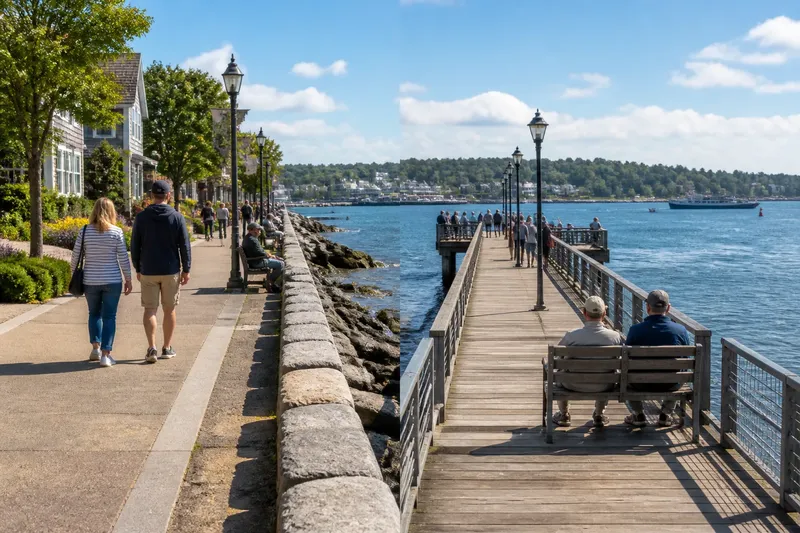
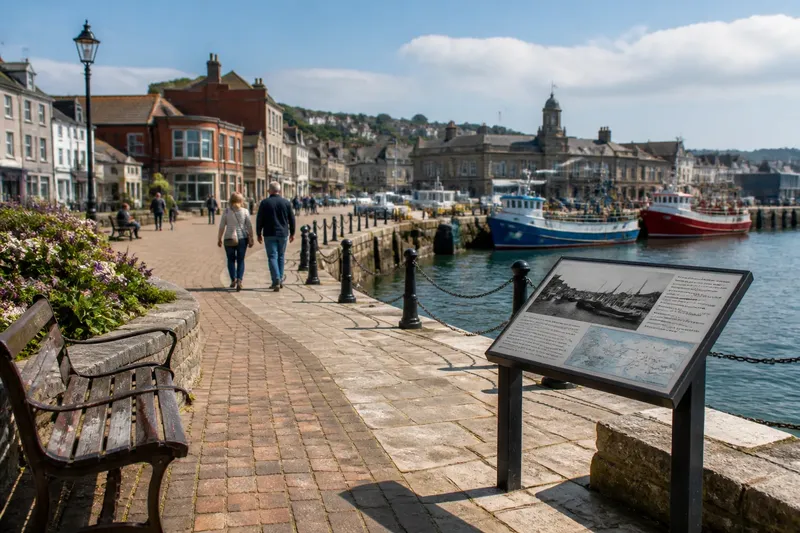
A waterfront often brings different uses close together. Public paths may pass beside boat repair, fishing access, ferry operations, or storage areas. Watch for the physical cues that separate them: painted lines, gates, bollards, warning signs, changes in paving, or a clear working zone. These details can explain why a shoreline feels open in one place and restricted in another.
Notice when the boundary is hard to interpret. A gap in a fence may look like an invitation but lead into an operating area. A sign may name a restriction without making the public route obvious. Stay on the clearly public side, follow posted directions, and treat uncertainty as a reason to pause rather than explore through a barrier.
Sound and smell can add context, too. A motor starting, gulls calling around a catch, or the sharp odor of fuel may point to activity nearby, but none tells the whole story alone. Record the sensation and its location without claiming a cause you cannot see.
Separate fact and inference
Try a two-column note. Under “Observed,” write what your senses can confirm. Under “Possible meaning,” record a cautious interpretation or a question. For example: “Observed: a stack of empty crates beside the public path. Possible meaning: they may be used for handling goods; I cannot tell what they contain or when they are moved.”
This distinction matters because waterfront details can have several explanations. A closed gate might mark private property, a temporary repair, or a safety boundary. A quiet dock might be between busy periods. A single visit can describe what was visible at that moment, not establish a permanent pattern.
When signs provide useful context, copy their wording accurately and note where you saw them. Do not treat an old notice, faded marking, or ambiguous symbol as current policy. For access questions that affect your visit, follow the latest posted instructions or ask the facility operator.
What can a walk tell you?
How do I tell public access from work space?
Use posted signs, marked paths, gates, and visible operating areas as your cues. If the boundary is unclear, remain on the route that is plainly open to the public and do not cross barriers.
Can one visit show how a harbor works?
It can reveal visible activities and physical clues, but a single visit cannot establish a full routine or explain every object. Describe the moment you saw and leave broader claims open.
What should I write down?
Note the location, the visible object or action, and the difference between observation and inference. A short phone note is often enough to preserve a useful detail without turning the walk into a documentation project.
Is it all right to photograph waterfront work?
Follow posted rules and respect workers’ privacy; avoid close images of people or restricted spaces without permission. If photography is discouraged or the boundary is uncertain, make a written observation instead.
Follow one working clue
Imagine you begin at an invented public harbor park with a notebook and choose a coil of rope beside a marked dock as your starting clue. First, you write the visible facts: the rope lies near a bollard, a vessel is tied nearby, and a sign says the dock is restricted. Next, you note a cautious inference: the rope may be connected to mooring, though you cannot tell who placed it or when it is used. Then you stay on the public path and walk on to a shed where a hose reaches toward the water. You record that the hose’s purpose is unclear rather than joining the two clues into a claim. Your resulting account is specific—a public route passes close to visible dock equipment, while signs mark where visitors should stop—without pretending to explain the harbor’s operations.
That approach works on a short visit as well as a longer walk. Pick one object or sound, follow only what you can observe from public space, and write down what would change your interpretation: a label, a worker’s explanation, or a posted notice. The unanswered question is part of the record, not a gap you need to fill.
Leave room for change
Waterfront work changes with weather, maintenance, tides, and operating schedules. A gate that is open on one visit may be closed on another; equipment may appear or disappear. Note the conditions you encounter and avoid treating a temporary scene as the permanent character of a place.
As you finish, ask what the public path allowed you to see and what it kept out of view. That boundary is useful information in itself: it shows where observation ends and where a visitor should leave the work to those responsible for it.