Promenade or Pier: Two Different Ways to Meet the Water
Promenade or pier? Compare a shoreline route with a structure over the water to choose the public-space experience that fits the place and its visitors.
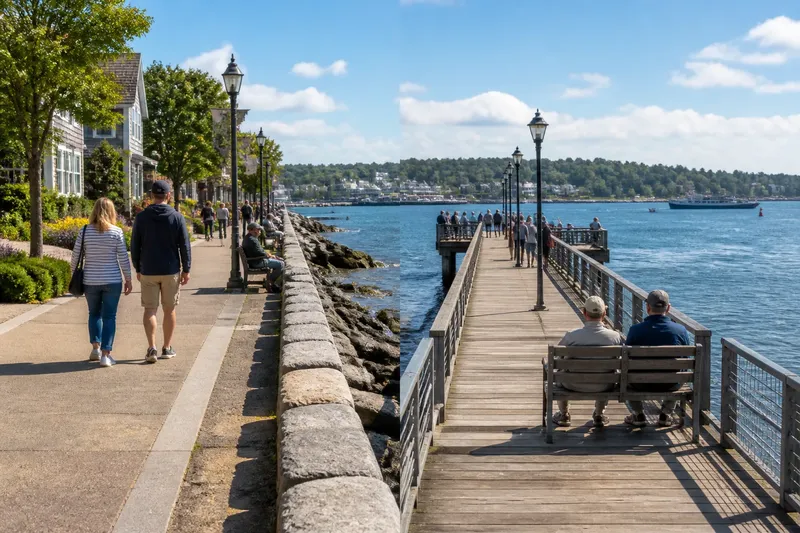
Promenade or pier: which one lets people meet the water on the terms a particular shore can support? A promenade carries visitors alongside the edge; a pier sends them out over it. That difference shapes more than the view. It changes how people move, pause, turn back, and share space with the coast.
Read the direction
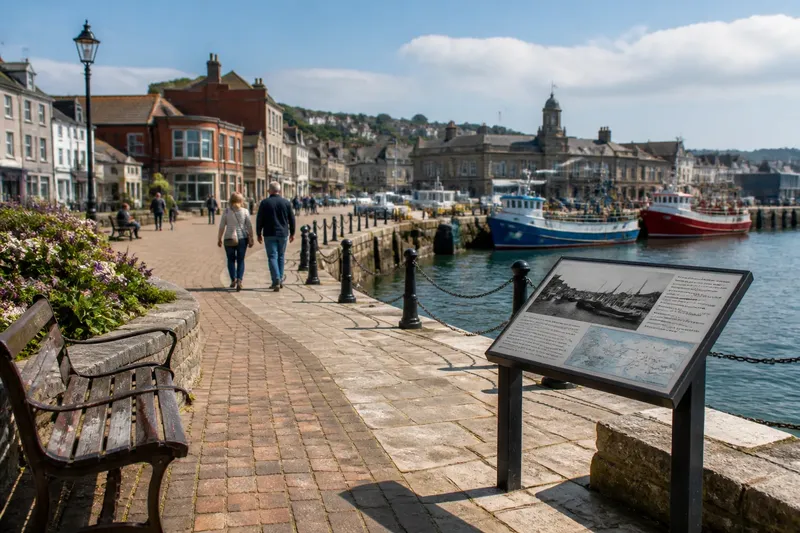
A promenade is a route with the water beside it. Its length can connect a beach entrance, a ferry landing, a neighborhood street, or a small harbor. The experience unfolds sideways: the view shifts as the walker passes openings, seawalls, benches, and working edges.
A pier changes the direction of travel. People leave the shore and move toward the water, often following a single deck to a wider end or a turning point. The approach becomes part of the experience: the shore recedes behind, while the water surrounds more of the view.
That distinction can guide an early design conversation. Ask whether visitors need to travel along the waterfront or reach a place over the water. A route that primarily serves movement may suit a promenade. A destination that invites lingering may suit a pier. Some places need both, but one form should not be treated as a substitute for the other.
Notice the pauses
On a promenade, stopping places interrupt a long route. A bench facing the inlet, a widened overlook, or a gap in a low wall can make room to watch boats without blocking people passing behind. The placement matters: a pause tucked into the route feels different from one that narrows it.
A pier concentrates pauses along a narrower path. Railings, lighting, seating, and the deck’s width all affect whether people can stop while others move past. At its end, the structure may encourage a longer stay, but only if the space can hold visitors without making the return feel like squeezing through a crowd.
For either form, look for the natural stopping points already present. Where do people turn toward the water? Where do they sit, fish, take a photograph, or wait for someone? Those observations can suggest where a designed pause belongs, without assuming every visitor wants the same view or activity.
Keep shore access visible
A pier can offer a close encounter with the water, yet it may also make the shoreline feel farther away. Its entrance should be easy to find from nearby streets and public paths. People should be able to understand where the structure begins, where it ends, and how to return without guesswork.
A promenade can connect more points along the shore, but continuity alone does not make it welcoming. A route may pass beside a tall barrier, a busy service area, or a stretch where the water is hard to see. Check whether openings and sightlines let people understand their relationship to the edge as they move.
Imagine a small waterfront with a ferry stop at one end and a public beach at the other. If the main need is a comfortable connection between those destinations, a promenade could link them while placing overlooks at useful intervals. If visitors chiefly want to stand above the inlet and watch vessels approach, a short pier near the landing could provide that distinct destination. The right choice follows the public’s intended experience, not the shape that looks more dramatic on a plan.
Ask before choosing?
What is a promenade?
A promenade is a public path or walk along a waterfront, usually following the shoreline. Its defining experience is movement beside the water, with access points and pauses along the way.
What is a pier?
A pier is a structure projecting from shore over the water. It offers an outward route and a viewpoint surrounded by water on more sides than a shoreline path typically provides.
Which is better for fishing?
That depends on local rules, water conditions, and the needs of other users. A pier can provide a designated place over the water, while a promenade may pass fishing spots without making the whole route a fishing area.
Can a waterfront have both?
Yes, if each form has a clear role and the connections between them are legible. A promenade can serve as the shore route, while a pier offers a separate destination rather than a detour everyone must take.
Fit the form to the edge
A promenade follows the character of the shoreline, which may bend, narrow, or meet working waterfront uses. Its alignment can preserve views and connect existing public entrances, but designers must consider where the path shares space with service access or other activities.
A pier extends over water, so its support, deck, and approach have to suit the site. Salt exposure, waves, tides, and maintenance access affect design choices. Those conditions are not interchangeable from one coast to another. Where the right answer depends on engineering requirements, permits, manufacturer instructions, or local rules, consult the relevant professionals and authorities.
Neither form is automatically more accessible. Consider the full journey from the nearest public arrival point, including the route to the entrance, changes in surface, places to rest, and how someone turns around or leaves. A pier’s outward path can make the return leg feel longer; a promenade’s extended route can make distance harder to judge. Clear wayfinding and well-placed resting places help visitors make informed choices.
Choose the public experience
When comparing a promenade or pier, describe what people should be able to do there in plain terms. Walk to another destination, pause beside the water, look across a harbor, or spend time above the waves: each intention points toward a different spatial experience. Then check whether the proposed form leaves room for other waterfront users and makes the route’s limits clear.
A useful design conversation can start with a simple sketch: mark the shore, existing entrances, likely stopping points, and the places where visitors should be able to see or reach the water. A line tracing the coast suggests a promenade; a line heading out from shore suggests a pier. The sketch is not a construction plan. It is a way to make the public-space choice visible before details obscure it.
Choose the promenade when the water belongs beside a journey. Choose the pier when the water itself is the destination. And before either form is fixed, stand at the proposed entrance and ask what a first-time visitor would understand about where to go, where to pause, and how to get back to shore.