The Rise of the Seaside Promenade as a Public Route
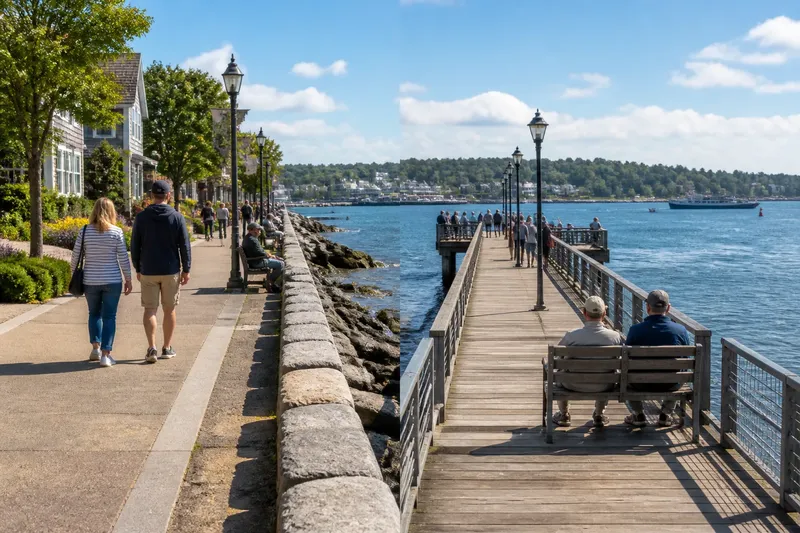
The rise of the seaside promenade shaped coastal towns by giving people a distinct way to stroll, take in the view, and meet the shore.
Why did the seaside promenade become a destination in its own right? The rise of the seaside promenade can be read as a shift in how some coastal towns framed the shore: not merely as a boundary to pass, but as a place for a deliberate walk. Imagine the fictional town of Bellhaven, where residents debate what its waterfront route should express. Their choices show how a promenade can give a town a recognizable public setting without changing the coastline itself.
A distinctive kind of walk
Bellhaven’s council is not trying to turn every stretch of shoreline into the same kind of place. Its discussion starts with a simpler question: what should a person notice while walking near the sea? One answer is the water. Another is the town itself—its streets, public buildings, working areas, and daily routines.
A promenade can hold those views in conversation. Its character comes from the experience of walking beside the coast, rather than from a single object or destination. That is one useful way to understand its place in coastal life, without claiming that every promenade arose for the same reason or followed one historical path.
For Bellhaven, this interpretation changes the design conversation. The question is no longer only how to move people along the shore. It is also how the setting invites attention: toward the water at one moment, toward the town at another.
Bellhaven’s coastal character
In this invented situation, Bellhaven’s planning group gathers a street map, a few waterfront photographs, and notes from residents about what they recognize as distinctly local. Some mention the sound of boats near the harbor. Others point to the market square, the old bathing pavilion, or the open view from a nearby headland.
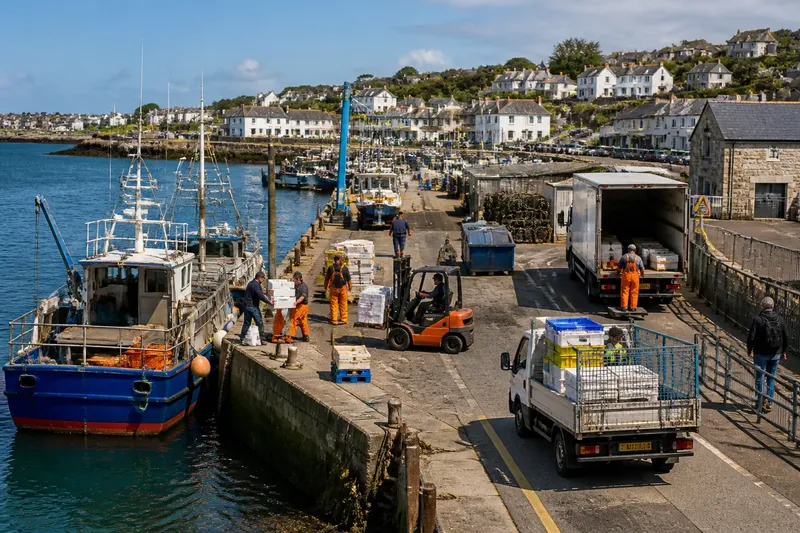
The group uses those observations to shape the promenade’s identity. It keeps the harbor’s working character visible rather than dressing it up as a decorative backdrop. Near the pavilion, it chooses materials and signs that help visitors understand the site’s history without pretending that every part of the waterfront shares one story.
These choices do not settle every question about coastal design. They do, however, give Bellhaven a way to connect the promenade to the place around it. A route that could belong to any town becomes more legible as part of this one.
Details that tell a story
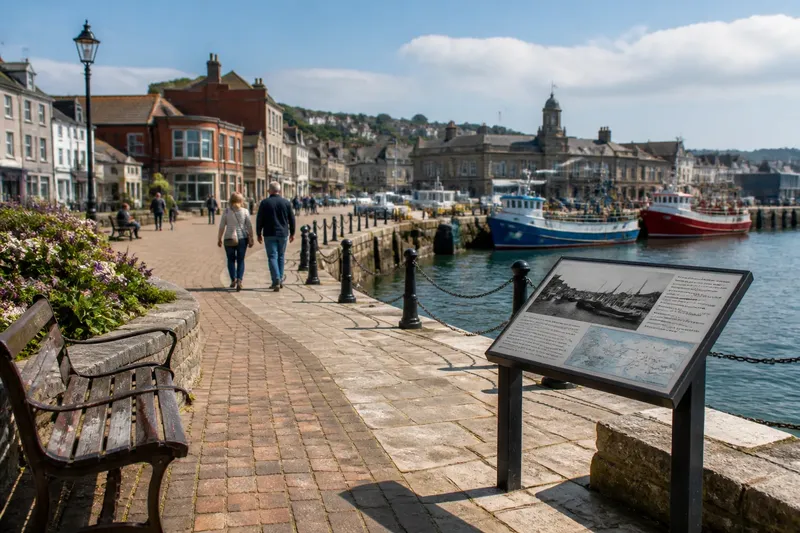
Materials can quietly signal where a person is. Bellhaven might use brick near the market square, for instance, and a more weather-tolerant surface near exposed sections. The point is not to impose a decorative theme. It is to make transitions feel considered and to help visitors read the waterfront as a sequence of local places.
Signs can do similar work. A small marker might explain why a harbor building faces the water, while a map could show how the public space relates to nearby streets and destinations. The best information is specific enough to reward curiosity and brief enough not to compete with the view.
Sound and activity matter, too. A promenade beside a working harbor will feel different from one next to a quiet beach. Bellhaven’s design lets that difference remain apparent. It avoids treating the coast as scenery that must be hushed or polished into uniformity.
Whose story appears?
A town’s chosen identity can leave people out if it relies on only one version of local history. Bellhaven’s group therefore asks whose experiences are represented in signs, public art, and place names. The harbor’s story might include workers and visitors, not just the merchants who owned nearby buildings.
That question is practical as well as historical. Residents may recognize familiar places differently from seasonal visitors. A promenade that acknowledges several layers of use can feel rooted without suggesting that the waterfront belongs only to people who already know its story.
Imagine the group has a draft sign that describes the harbor solely as a scenic landmark. A resident points out that fishing crews still use the adjacent quay. The group revises the wording to mention the harbor’s working role, so the sign’s account matches what a visitor can see and avoids presenting active use as a relic.
How does a promenade express place?
What makes one promenade feel local?
Its relationship to nearby streets, buildings, landscapes, and everyday activities gives it a sense of place. Materials and signs can reinforce that character when they reflect real features rather than a generic coastal theme.
Should a promenade have a single design style?
Not necessarily. A consistent approach can make a place understandable, but local shifts in use and setting may call for different materials, signs, or details.
How can signs share local history?
Use concise, specific information tied to visible places or objects. For contested or layered histories, consult knowledgeable local people and avoid presenting one account as the only one.
Can a working harbor be part of the experience?
Yes. A promenade can help visitors understand that the harbor is both a place to see and a place where work continues. Public interpretation should not encourage people to enter restricted or operational areas.
Choosing details with care
Bellhaven’s group could use a simple review before approving design details. For each proposal, it notes what is visible on site, who might be affected, and what decision follows. That keeps the discussion tied to the actual waterfront rather than an abstract picture of what a seaside town ought to look like.
- Observe whether a proposed material echoes a nearby building or landscape; if it does, use it where it suits the setting, but if it feels forced, choose a simpler finish.
- Check whether a sign names a visible place or feature; if visitors can find it easily, keep the reference, but if they cannot, revise the location or wording.
- Observe whether a proposed story includes people who still use the site; if it does, confirm the account with local contributors, but if it does not, seek additional perspectives before publishing it.
- Check whether public art competes with a valued view; if it draws attention away from the intended outlook, move or redesign it, but if the setting supports both, retain the proposal.
- Observe whether a design detail could be mistaken for an invitation into a restricted work area; if so, add clear separation or directions, but if the boundary is already unmistakable, avoid unnecessary visual clutter.
- Check whether a proposed local reference is accurate and understandable to a newcomer; if both conditions hold, use it, but if either fails, explain the reference more clearly or leave it out.
Say Bellhaven is considering a painted metal marker beside its harbor. The starting inputs are a photograph of the spot, a draft sign about the quay, and notes from a harbor worker that the area remains active. The group checks the sightline, sees that the marker would obscure the harbor entrance, and moves it beside the public walkway. It also revises the sign to mention current work. The resulting decision keeps the marker and its local story while making the working boundary easier to recognize.
Care keeps meaning clear
Design details can lose their meaning if signs fade, surfaces become confusing, or temporary barriers appear without explanation. Bellhaven’s plan assigns responsibility for checking public information and makes sure that closures point people toward an available alternative. Where work affects access or safety, follow local rules and seek guidance from qualified professionals.
Care does not require the waterfront to look untouched. Weather, salt, and ordinary use are part of coastal life. The useful test is whether people can still understand what a place is, what is happening there, and how to respond.
The rise of the seaside promenade is best treated as a story with many local versions, not a single formula. Bellhaven’s most durable choice is to let its public waterfront reflect the place it serves: the water, the town’s recognizable features, and the people whose lives continue beside the shore.